Axiom Platform Vision

Project Overview
In this yearly strategic project, I worked closely with product leadership and executives to conceptualize and create a visual representation of how the business and product could evolve over the next 12-24 months. This exercise aimed to create alignment amongst cross-functional teams, while inspiring product and development team members to reimagine the product’s future evolution. These designs would also be used to secure buy-in for future product features and initiatives from external stakeholders.
My Contributions
As Principal Product Designer my role on this project was vast. I led problem and opportunity discovery, facilitated project coordination meetings, timeline management,  user researcher, UX Design and worked very closely with project managers to guarantee that our visions we're compatible. It was important that I help the business understand the next 12 month investment and value.
Process Overview
  • Collaborate with VP of Product, VP of Design and Director Product Management to review business objectives and goals for the following year.
  • Define problem/opportunity statements, identify feature improvements and net new feature concepts, outline design strategy and timeline.
  • Rapid prototype design concepts and validate with internal stackholders.
  • Iterate on concepts with VP of Product and VP of Design to both fine tune the design concepts, as well as craft the story and messaging to be presented to the larger product org.
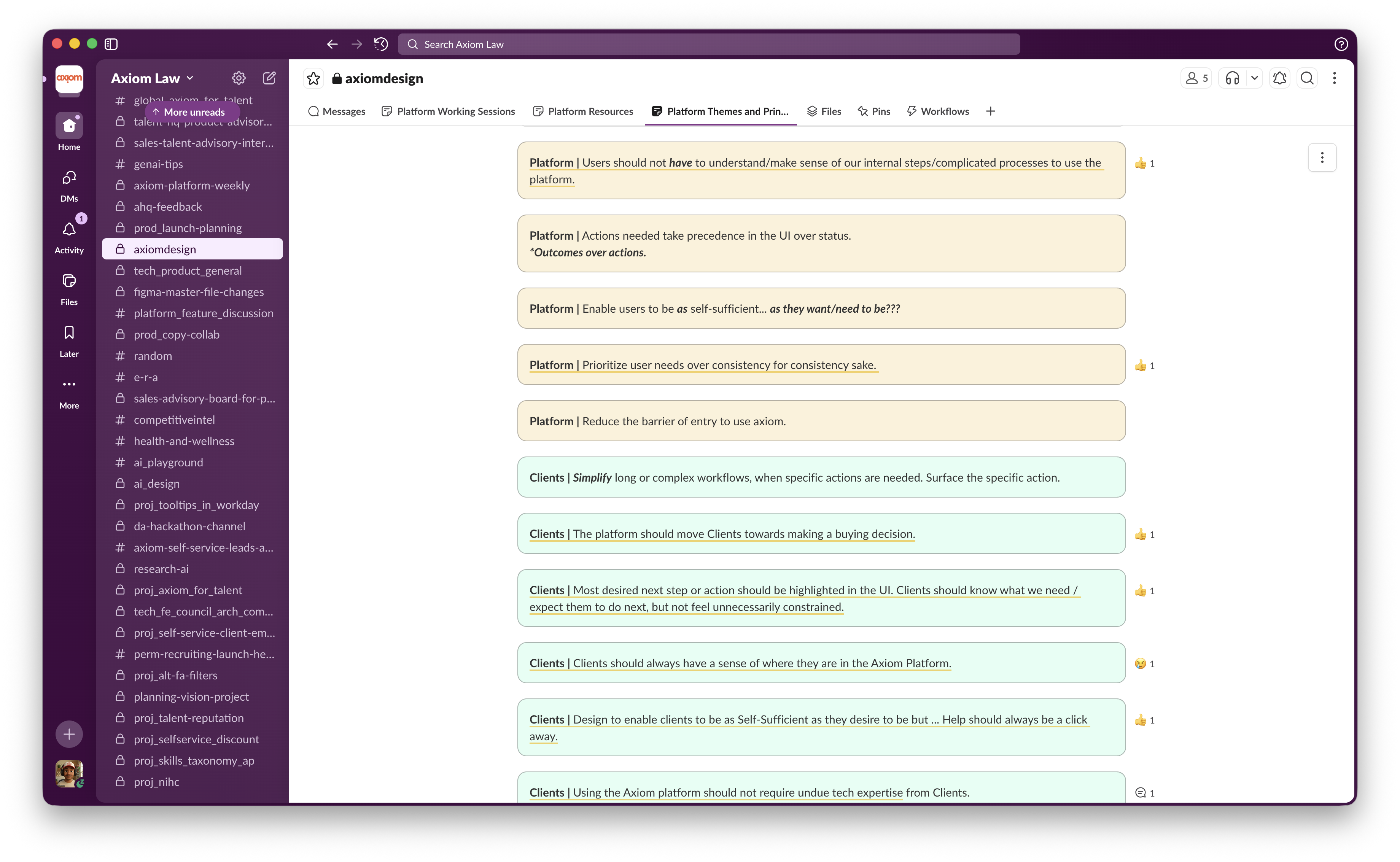
  • Define Platform Principles, using our understand of users to create rules and best practices that ensure we make each product decision with the end user in mind.
  • Present designs and concepts to the larger product org, focusing on connecting the dots and painting the visual for the future.
  • Facilitate meeting with Project Managers to review and finalize Platform Principles.
  • Collaborate with component engineers and designer to identify any net new component needs.
  • Evangelize Platform Principles in every product meeting, working session and design discussion to keep them top of mind for all product team members.
My Design Process
My process is based on the Double Diamond Theory and Lean UX principles. This process is top of mind in all of my design thinking, whether designing new features or strategizing future concepts. Always ensuring that I start with developing an intimate understanding the problem or opportunity.
Problem/Opportunity Statement
It is critical to make sure everyone involved in the process is aware of the problem we are trying to solve. Its almost impossible to identify a successful project without first defining what issues actually exist and what the end user needs. This can be uniquely tricky to manage on strategic ambiguous projects like these and require divergent thinking.

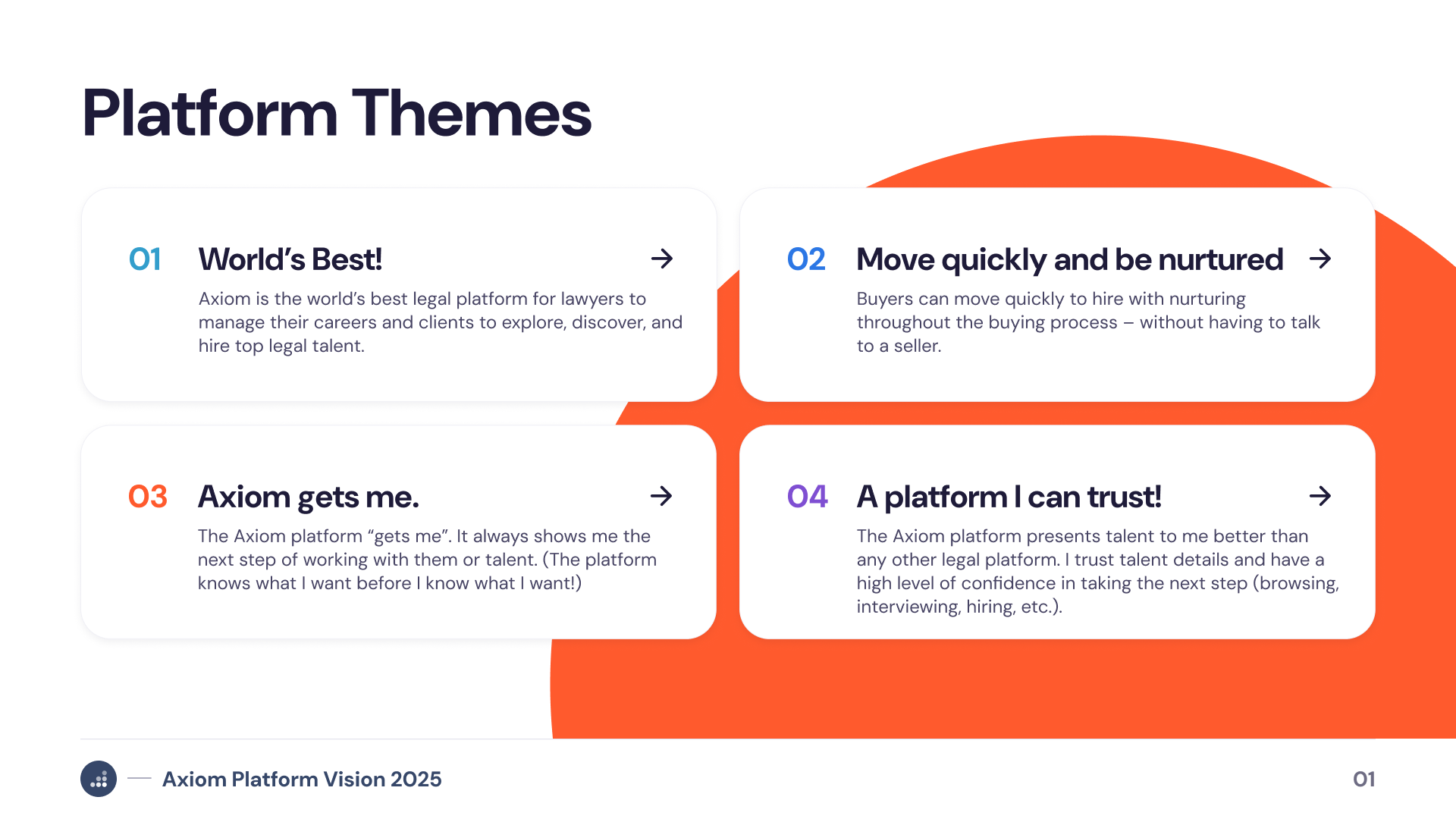
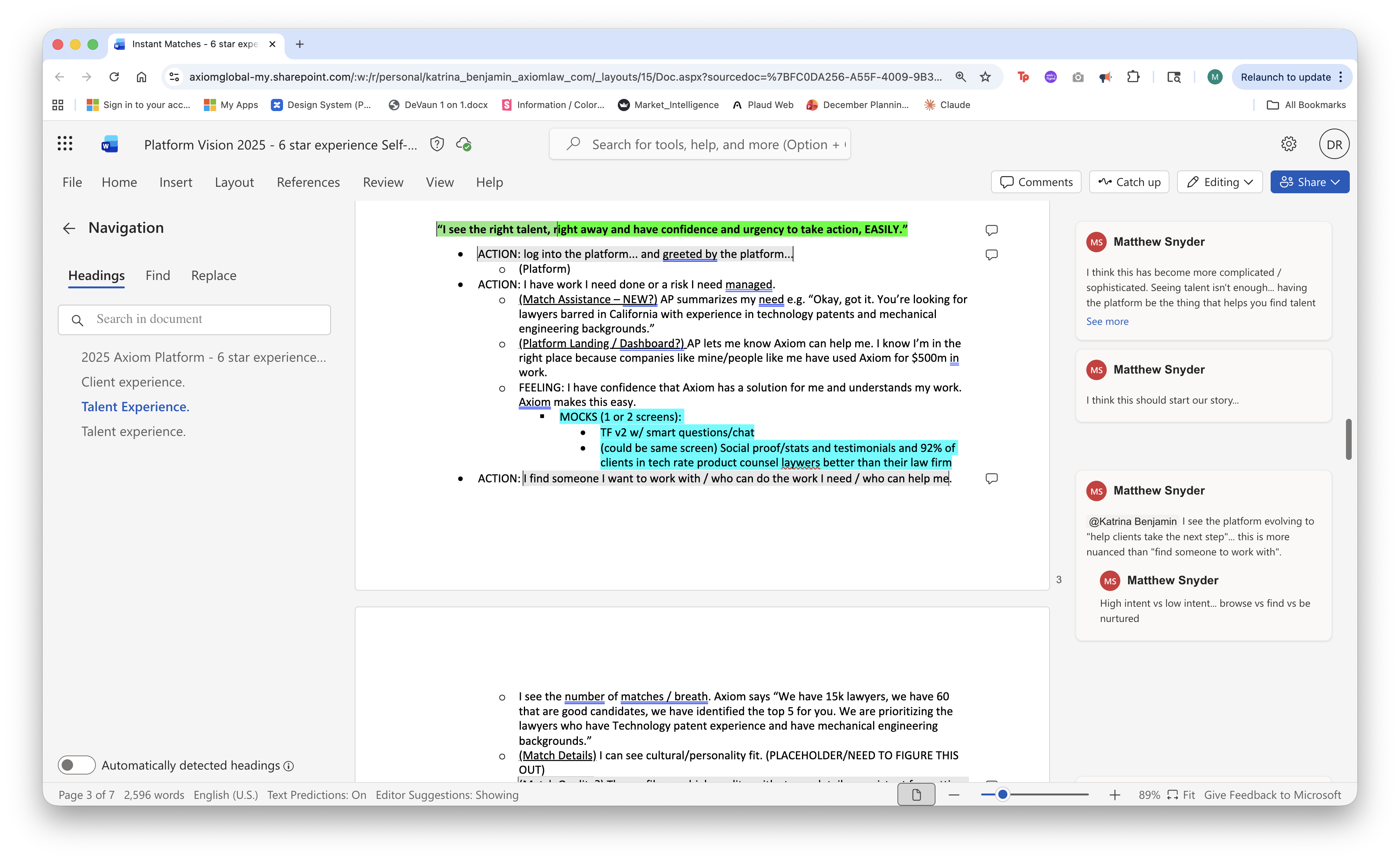
For this project I used a shared word docx to manage a project plan with the VP of Product and VP of Design. Instead of defining a traditional problem statement, we focused on creating Platform Themes and using them to conceptualize new customer experiences, client actions and a Think, Feel, Do model.

Example Theme:
Axiom is the world’s best legal platform for lawyers to manage their careers and clients to explore, discover, and hire top legal talent.


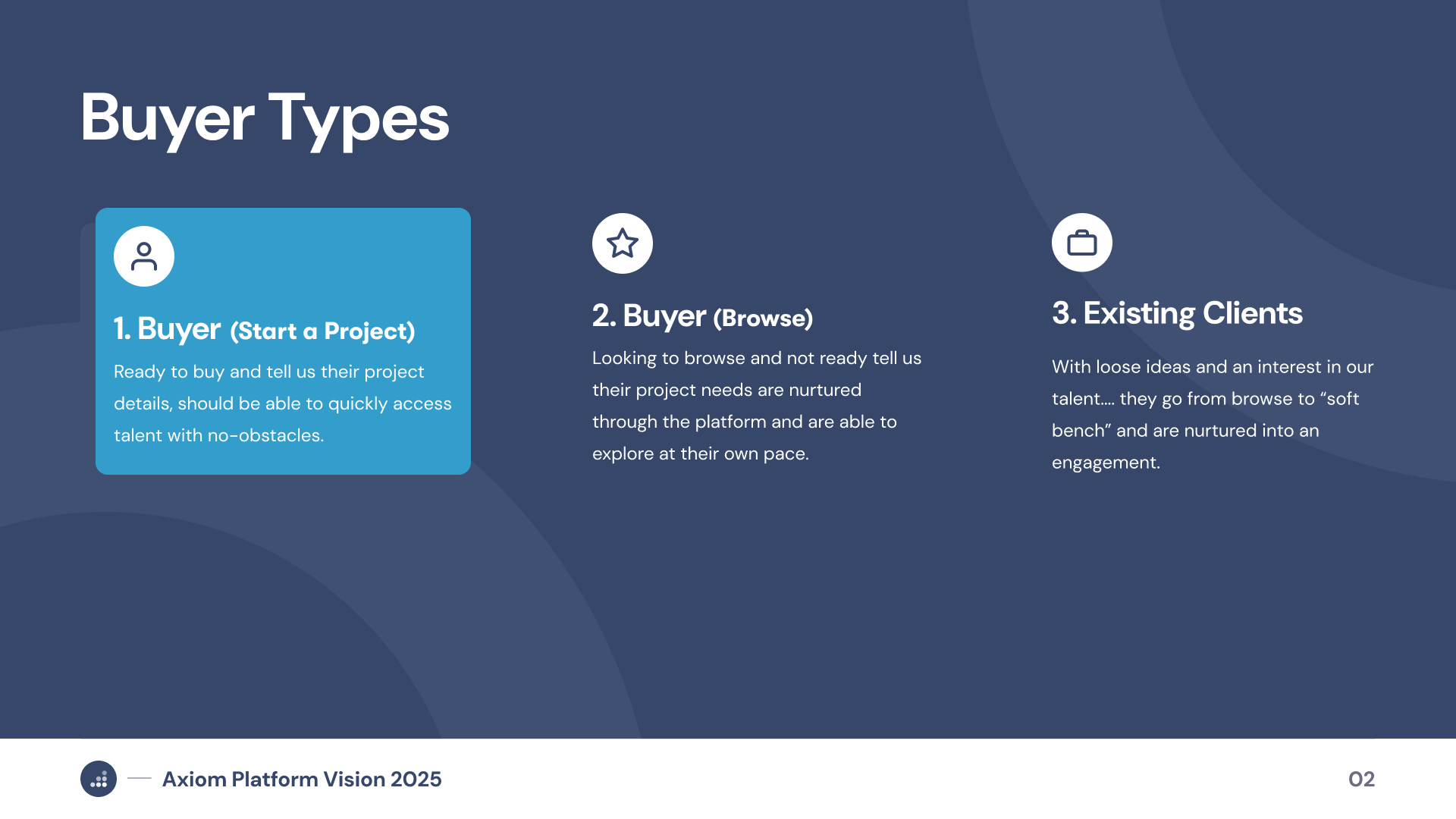
Client Action: Existing clients log in and are greeted by a platform (new client dashboard) that helps and encourages them to pick up where they left off, highlighting the next best action to take.

Client Action: New clients (Self Service users) create an account and can either quickly find talent (or browse) and are nurtured by the platform throughout their experience.
User Interviews
In order to get direct feedback from the end user and hear their pain points firsthand, I conducted a series of remote user interviews with numerous users of the current application.

The focus of the research was to validate the problem statement, better understanding the users ideal workflow and gathering feedback for additional features.
Gathering Insights
After conducting user interviews and receiving feedback, I was able to use the data to create user personas, empathy maps and journey maps for the user roles associated with the application.
Prototyping
During this phase of the design process, I created high fidelity mockups in Figma using components from our design system. I reviewed proposed designs and design iterations with the UX Design Team during our weekly design review and critique.
Usability Testing
I conducted a round of usability test with internal and external users of the application via in person and remote interviews. These interviews required users to complete a series tasks that would help determine how intuitive and user friendly the new design would be. The data gathered from these tests was used to validate my design decisions and make sure that the new proposed designs solved the problems our user were facing,
Platform Principals
To ensure that the knowledge gained was not lost and the product team was able to access and reference this shared understanding on an ongoing basis, I created a collection of Platform Principals for the platform as a whole and also for each user type. After creating the Platform Principals, I facilitated quarterly meetings with Designers and Project Managers, to discuss and update any principals that may be outdated as the business evolved. I worked hard to evangelize these principal in every product meeting, working session and design discussion to keep them top of mind for all product team members.  

I'd love to hear from you!

Feel free to reach out at anytime! Whether it's about a new opportunity or suggestions for improvement, I am always willing to chat with like minded professionals.

Thank you! Your submission has been received!
Oops! Something went wrong while submitting the form.